
Lesson 9: Understanding the Memory Text
Memory Text
“For out of much affliction and anguish of heart I wrote to you, with many tears, not that you should be grieved, but that you might know the love which I have so abundantly for you.” — 2 Corinthians 2:4 (NKJV)
Summary
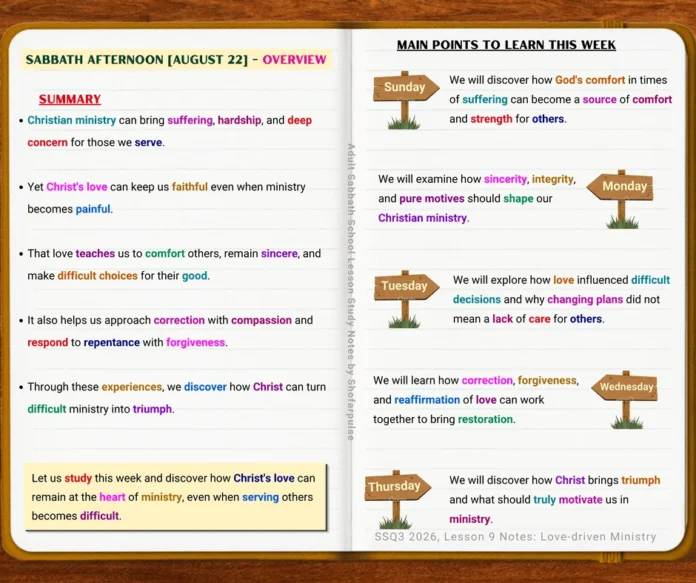
- Christian ministry should be guided by genuine love.
- Love does not ignore sin or avoid difficult situations.
- It seeks the spiritual good of others, even when correction is painful.
“For out of much affliction and anguish of heart…”
- These words describe the deep pain that came from caring for God’s people.
- The concern was not merely about correcting wrong behaviour.
- It was about the spiritual condition of those who had been affected by sin.
- True Christian love can feel deep sorrow when others are moving away from God.
“…I wrote to you, with many tears…”
- The tears show that the difficult message was not given with hatred or a desire to hurt.
- The correction came from a heart that deeply cared for the people involved.
- Godly correction should never be driven by anger, pride, revenge, or a desire to prove that we are right.
- It should come from love and a sincere concern for another person’s salvation.
“…not that you should be grieved…”
- The purpose was not to cause sorrow for its own sake.
- Painful correction may sometimes be necessary, but unnecessary pain should never be the goal.
- God desires repentance, restoration, and renewed fellowship with Him.
- This is why correction must be given with wisdom, humility, and love.
“…but that you might know the love which I have so abundantly for you.”
- The central thought is love.
- The people needed to understand that the difficult message came from genuine love and concern.
- Christian love does not approve of sin, but it seeks to restore the sinner.
- When someone responds to correction with repentance, love should lead to forgiveness, comfort, and renewed fellowship.
What This Means for You
- When you need to correct someone, examine your motive first.
- Do not correct others simply because you are angry or want to prove yourself right.
- Let your words show genuine concern for their relationship with God.
- When someone repents, do not continue to punish them for a wrong that has been forgiven.
- Follow Christ’s example by combining truth with love, firmness with compassion, and correction with forgiveness.
A Final Thought
- Love may sometimes require difficult words.
- Yet those words should never come from hatred or pride.
- They should seek the spiritual good of the person and the health of God’s church.
- When Christ’s love guides our actions, even difficult moments can become opportunities for repentance, forgiveness, restoration, and spiritual growth.
Read our Lesson 9 Overview for a simple summary of the week’s study from the Adult Sabbath School Bible Study Guide.
Explore our Sunday–Friday Lesson 9 Study Notes for Bible-based daily insights and practical spiritual lessons.
Browse more Adult Sabbath School Bible Study Guide (ABSG Q3 2026) resources for lesson summaries, memory text studies, and weekly Bible study notes.
Visit our Swahili Sabbath School Lessons for Kiswahili translations of the weekly lesson.
Explore our French Sabbath School Lessons for French translations of the Adult Sabbath School Bible Study Guide.